Sanoca Rural Fire District, Inc.
7221 Church Street
Saratoga, NC 27883
ph: 252-238-2392
fax: 252-238-2392
info

Services
What We Do
We provide and array of services. We may be a small department, but we strive to continually train and use the most currently available technology to achieve our mission and to provide the best service we can. All of this based with attention to detail with priority given to Life Safety and Property Conservation!
-
Safety Tips to Guard Against Dryer Fires
In 2005, more than 7,500 people across the United States were injured in clothes dryer fires. Fires which occurred because lint build up in the dryer or in the exhaust duct, flammable items were put in the dryers such as foam-backed rugs or athletic shoes, lack of maintenance, and improper installation like the use of plastic ducts or vinyl and foil venting that collapse when installed.
-
Here's some safety tips to guard against dryer fires:
-Clean the lint filter before and after each load.
-Check the outside exhaust while the dryer is operating to make sure air is escaping normally -- look for kinks or signs of crushing.
-Clean behind the dryer where lint can build up.
-Take special care with drying clothes that have been soiled with volatile chemicals like gasoline, cooking oils, cleaning agents, finishing oils and stains.
-AND DO NOT LEAVE THE HOUSE WITH THE DRYER LEFT RUNNING! -
Basic info you should know about fire extinguishers:

There are three basic classes of fires. All fire extinguishers are labeled with standard symbols, letters, or both for the classes of fire they can put out.
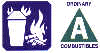
Class A: Ordinary combustibles such as wood, cloth, and paper.
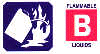
Class B: Flammable liquids such as gasoline, oil, and oil-based paint.
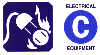
Class C: Energized electrical equipment, including wiring, fuse boxes, and appliances. -
Don't try to put it out yourself-
Don't wait to call-FROM THIS...


...TO THIS!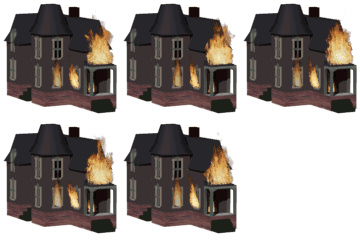

Fire Suppression
Structural Fires
Vehicle Fires
Vegetation Fires

Medical First Responder
Vehicle Accidents
Trauma Incidents
Medical Emergencies

Wildland Fire Suppression
Forest Fires
Farm/Crop Land Fires
Fire Prevention & Public Education
Open House
Halloween Activities
Community Involvement
Smoke Detector Installation
Hydrant Testing/Maintenance
Commercial Pre-Fire Planning
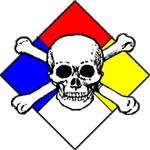
Hazardous Materials
Awareness Level (Identification)
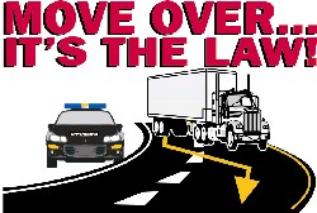
A new law in North Carolina protects State Troopers and other law enforcement officers and emergency workers stopped along side our highways.
The Highway Patrol has taken steps to ensure more safety for citizens and troopers. In January, 2002, the state's Move Over law took effect requiring motorists, if they can safely do so, to move one lane away from any law enforcement or other emergency vehicle that is on the side of the highway.
The law requires motorists slow down and approach
cautiously when an emergency vehicle is stopped on the
shoulder of the roadway with its lights flashing. Motorists are required to move over to another lane away from the
emergency vehicle on a multi-lane highway or slow down on a two lane highway and can do so safely. Motorists must slow down while maintaining a safe speed. G.S. 20-157 (f).
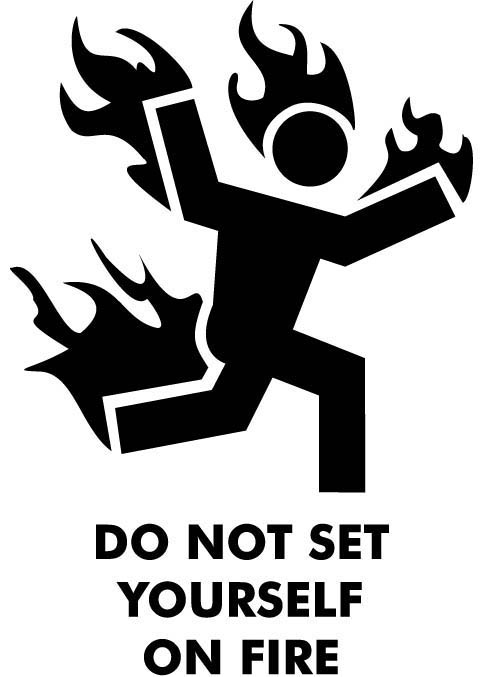
Sparky says, "In case your clothes
catch on fire, STOP DROP and ROLL!"
7221 Church Street
Saratoga, NC 27883
ph: 252-238-2392
fax: 252-238-2392
info